Many Roads to Malta: The School Esports World Championships
In 2025, the first School Esports World Championships brought students from 11 schools, 7 countries and 4 continents to Malta. Ahead of the second edition, this case study looks at what the SEWC pathway creates for students and schools.
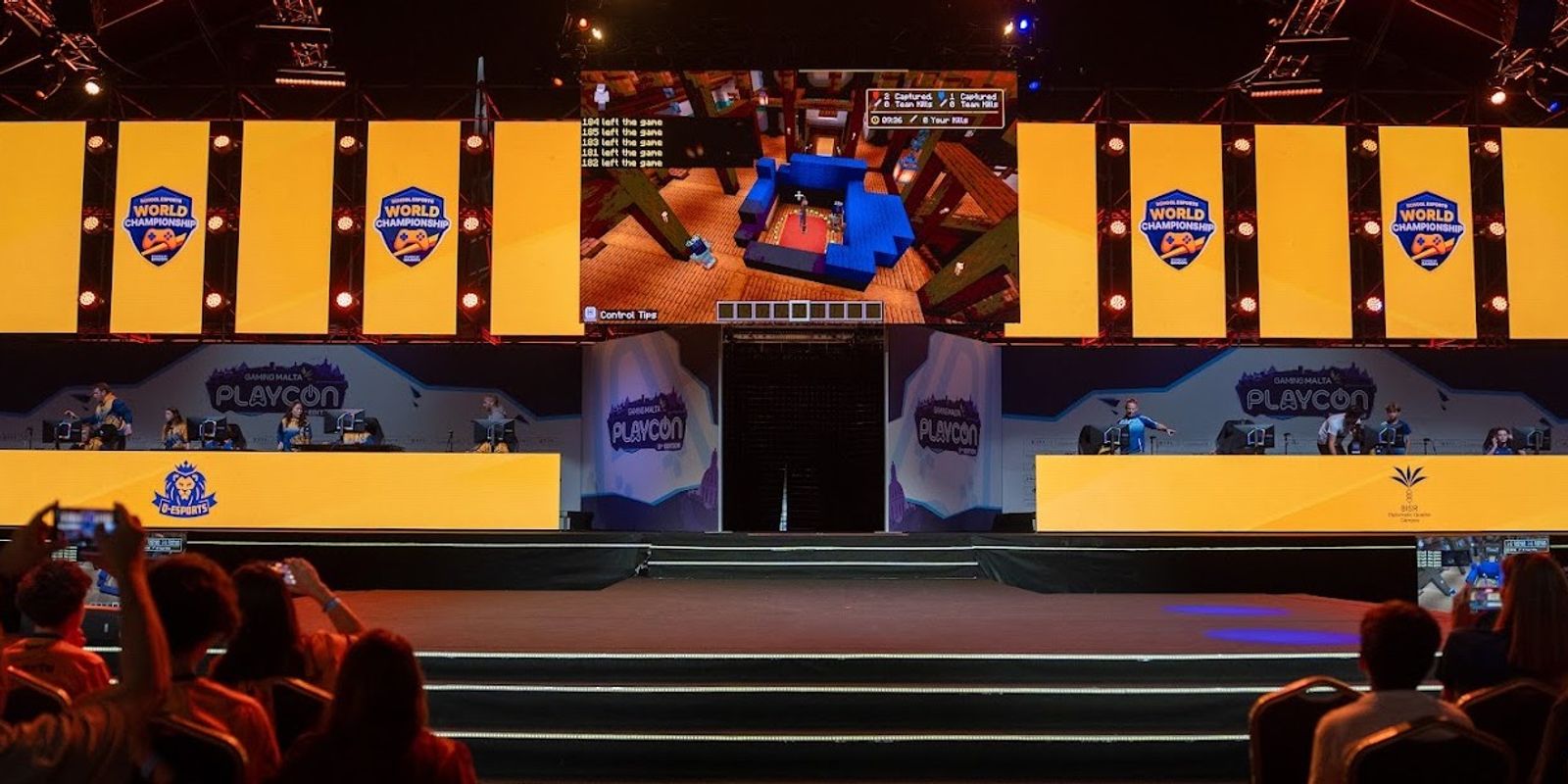
In October 2025, at PlayCon in Malta, Centennial Schools from South Africa beat Queen Ethelburga’s Collegiate in Golden Flag overtime to win the Minecraft 13+ final. It was one of three world titles decided at the inaugural School Esports World Championships (SEWC), where students from 11 schools, 7 countries and 4 continents competed live.
The SEWC gives school esports what traditional sport has always had: a pathway that ends on a world stage. This case study looks at what that pathway creates for students and schools, and how it is growing ahead of the second edition, in Malta from 18 to 23 November 2026.
At a Glance
- First edition: October 2025 · PlayCon, Malta
- Who competed: Students from 11 schools, 7 countries and 4 continents
- Games: Rocket League · Minecraft Capture the Flag (13+ and U13)
- 2025 champions: Lycée International de Londres Winston Churchill (Rocket League) · Centennial Schools, South Africa (Minecraft 13+) · British International School Riyadh (Minecraft U13)
- Qualifying routes: COBIS, ECIS, ISA, IAPS and Americas League competitions and the Malta Qualifiers, among others, and the DAIGON Competitive Track
- Partner network: 6 school associations, representing 3,000+ schools
- Second edition: 18 to 23 November 2026 · Malta · 16+ schools · 100+ students expected
The Challenge
For students who play football or netball, school sport comes with a clear ladder: fixtures, leagues and national finals. For students whose talent lies in games such as Minecraft or Rocket League, there was no equivalent. Many had never represented their school in anything.
Teachers describe these students in similar terms: not on sports teams or in music, still looking for where they fit. Schools were missing the ladder too. Ibstock Place School had built a dedicated esports arena, but had never competed at a world championship in any discipline.
The SEWC has created a pathway for these students: a reason to train, a team to belong to and a stage worth reaching.
The Solution: A Pathway, Not a One-Off Event
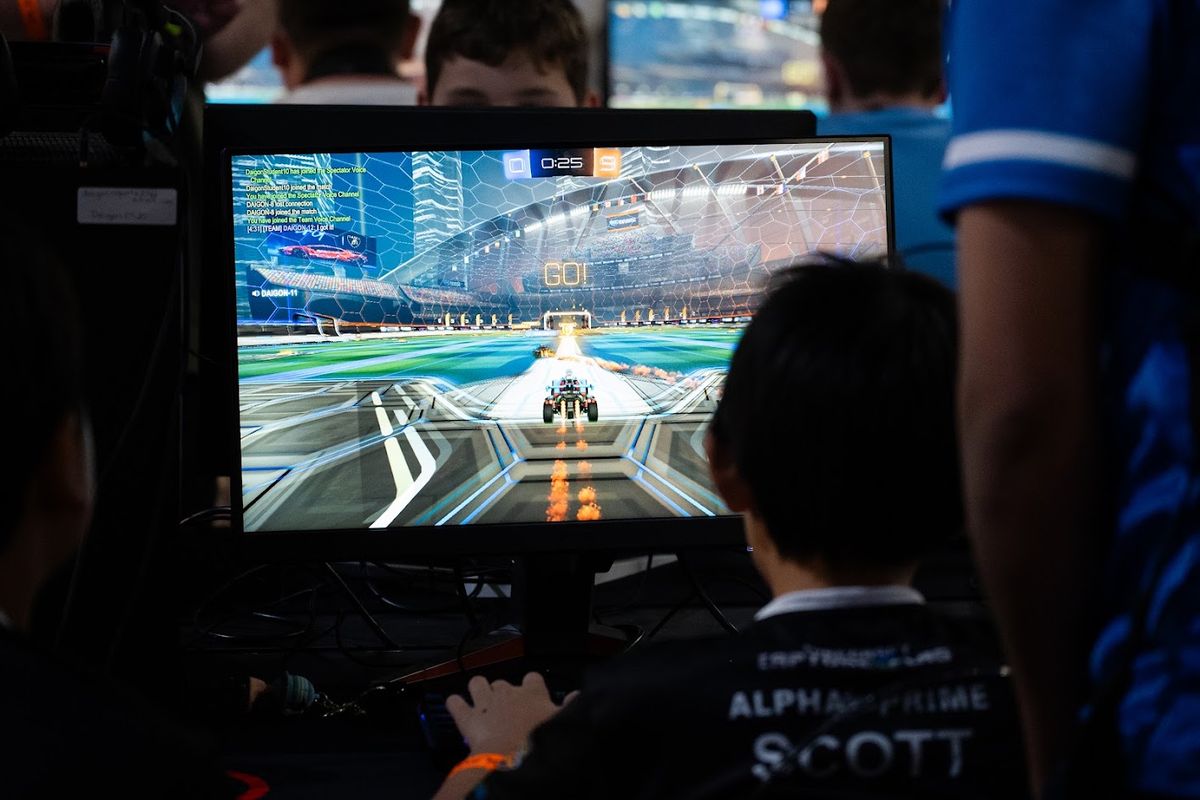
- Compete. Schools enter official esports competitions run by DAIGON with school associations and regional leagues, including COBIS, ECIS, ISA, IAPS, the Americas League and the Malta Qualifiers, among others, or through the DAIGON Competitive Track. Most rounds are played online from school; some routes include an in-person national final.
- Qualify. The strongest teams earn a place at the world championships. Final standings depend on results across the whole competition season, making qualification itself a sustained competitive journey.
- Compete in Malta. Qualified teams travel to Malta for the live finals. In 2025, teams competed on stage at PlayCon, in team jerseys, with matches on a live stream. A cultural programme included visits to Mdina and Valletta.
The entry point is deliberately low. Clifton College’s Minecraft licences cost between £100 and £200. Gosfield School got started with about £200 in controllers. At the British School of Bucharest, the only ongoing cost is competition entry fees. Schools can also go further, as Ibstock did with its arena. Every route leads to the same stage.
The Results
Across the schools in this case study, teachers and school leaders describe four outcomes.
1. Belonging
SEWC teams bring together students who rarely end up on the same team. At Belmont Mill Hill Prep, a very sporty school, more than half the pupils who came to esports last year were not part of any sports team. The British School of Bucharest started its programme after its PASS wellbeing assessment showed that a group of students with low results shared one thing: they all loved gaming. In 2026, that programme sends a team to the world championships. At Ibstock Place School, SEN students are represented across the programme, including at competitive level.
“My time there has taken me from being unsure about how this can fit in to a school setting to seeing that it is as vital to school life for some pupils as rugby, football or netball is to others. It provides a place of belonging and gives the opportunity for them to shine on the biggest stage of them all.”
John Rimmer, Scarisbrick Hall School, after SEWC 2025
2. Resilience
A world championship brings real pressure and real defeat, and schools describe students learning from both. Scarisbrick Hall lost its 2025 semifinal in extra time; in the 2026 qualifying season, the same core team won every match it played. At Shanghai Singapore International School, a student who missed selection for Malta in 2025 trained for a year and returns as one of the strongest players. At Clifton College, players get exactly one minute to complain after a defeat, and then the team works out how to win next time.
“The competition was brutal and the pressure intense. However, our team showed exceptional resilience in getting back up after defeat and fighting on. Performance under fire cannot be developed without fire. Our teams have grown from the experience.”
Shanghai Singapore International School, after SEWC 2025
3. Global Citizenship
In 2025, SSIS was the only school from China at the championships; in 2026, the British School of Bucharest will represent Romania for the first time. Many teams are international before they arrive. Aiglon College’s squad includes students from the United States, Luxembourg, Japan, China and India. “The culture is Minecraft,” says Darren Benson. The connections outlast the event: Al Yasat Private School (UAE) left Malta with lasting bonds with other schools, and Centennial Schools built friendships with teams from around the world.
“The camaraderie between the teams was palpable and we saw our students grow in their resilience, empathy and global mindedness. It wasn’t just a moment to shine as gamers, it was a time to feel connected through gaming.”
Chatmore International School, Bermuda, after SEWC 2025
4. Recognition
Reaching a world championship changes how esports is seen across the school. At Queen Ethelburga’s, the only school to put both of its teams on the podium in 2025, every one of more than 1,000 students knows who went to Malta. At Gosfield School, no student chose computer science at GCSE before Guy Colnbrook arrived two years ago; now the number is in double digits. “Computing is something that has sort of not been recognized in the past,” he says. “But now it’s going to be seen alongside performing arts and sport.” At Lycée, parents who saw esports as just playing video games now say it develops more skills than they thought. Younger pupils are watching too: Scarisbrick Hall’s Year 7s are already planning their own route, and at Gosfield the programme has become “really aspirational” for the prep school.
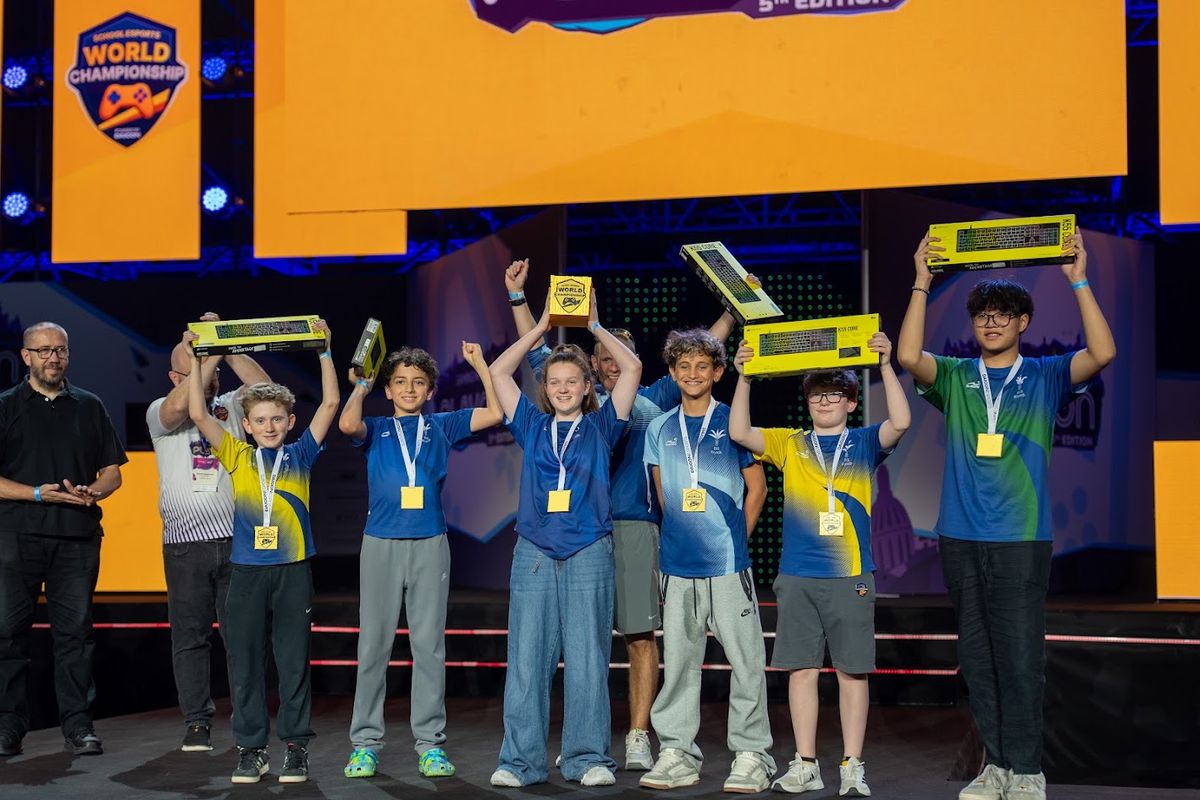
“It means so, so much. It will be the first School Esports World Championships I have gone to in my life and, as team captain, no less! I really want to be good enough to stay as their leader after Malta and after we come back, but I mostly just want to do it for my team.”
13+ Captain, Queen Ethelburga’s Collegiate, SEWC 2026
SEWC 2026: The Pathway Is Growing
The second edition shows the pathway maturing. 16+ schools are heading to Malta, up from 11 in 2025, and more than ten of them are taking part for the first time. Podium schools return with new squads: every player from Lycée’s champion team has graduated, and Queen Ethelburga’s senior team is entirely new. New schools arrive through several qualifying routes, among them Ibstock Place School, heading to its first world championship in any discipline. Host nation Malta will be represented too: the Malta Qualifiers on 24 October 2026 selected Maltese schools to compete.
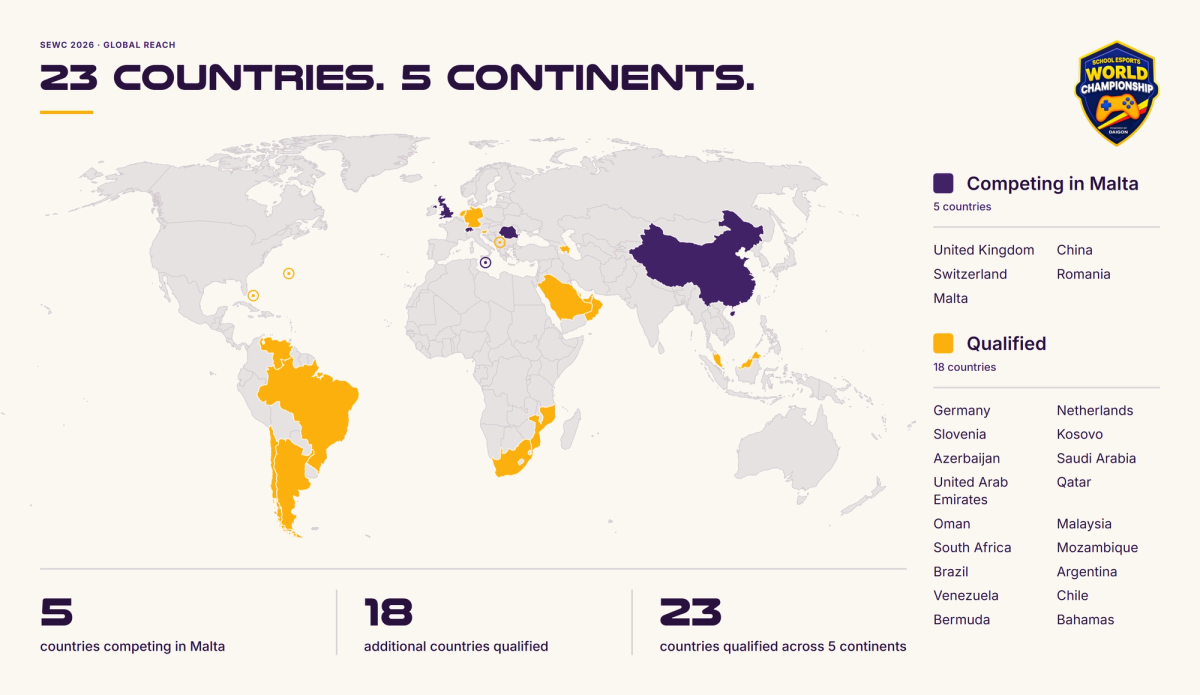
The reach now extends beyond those who can travel. Teams from 18 more countries across five continents qualified for SEWC 2026 but will not be able to make the journey for logistical reasons. Even so, SEWC expects 100+ students in Malta.
Back at school, programmes are growing around the championships. Lycée is adding its first Minecraft team. Aiglon is soon joining DAIGON’s Rocket League competition. Clifton wants Under-14, Under-16 and eventually open teams. Ibstock is planning a beginners’ league with other schools, focused on girls and first-time competitors. Gosfield is planning a virtual league with local schools.
Conclusion: A World Stage With a Pathway Behind It
Schools arrived at the SEWC through different routes and for different reasons. What they found at the end of that journey was remarkably consistent: a competitive pathway, a team to belong to, and an opportunity to represent their school on a world stage.
The impact went beyond the results. Students found belonging, learned to respond to pressure and defeat, built connections across borders, and gained recognition within their school communities. For schools, the championships brought esports into the same culture of aspiration, representation and competition that surrounds traditional school sport.
From 2025 to 2026, the pathway has kept growing, giving students who may not find their place in traditional school sport another way to compete, represent their school and aim for something extraordinary.
With thanks to: Arthur Bourillon, Lycée International de Londres Winston Churchill · John Rimmer, Scarisbrick Hall School · Thomas Lytwynchuk, Clifton College · Jacob Southwood and Chris Wolsey, Ibstock Place School · Craig Griebenow, Shanghai Singapore International School · James Luxford, Queen Ethelburga’s Collegiate · Ed Parkin, Ashley Manor Preparatory School · Steve Young, British School of Bucharest · Darren Benson and Darren Wise, Aiglon College · Guy Colnbrook, Gosfield School · Uonna Atytalla, Belmont Mill Hill Preparatory School · and every school that shared feedback after SEWC 2025
Get in touch: DAIGON Esports · www.daigonesports.com
Interested in bringing DAIGON to your school?
Book a call