Trailblazers: How SSIS Shanghai Became China's Voice at the School Esports World Championships
Shanghai Singapore International School was the only school from China at the first School Esports World Championships. They got destroyed, learned from it, and are going back to Malta to compete.
School Blog Profile | DAIGON Esports | SEWC 2026
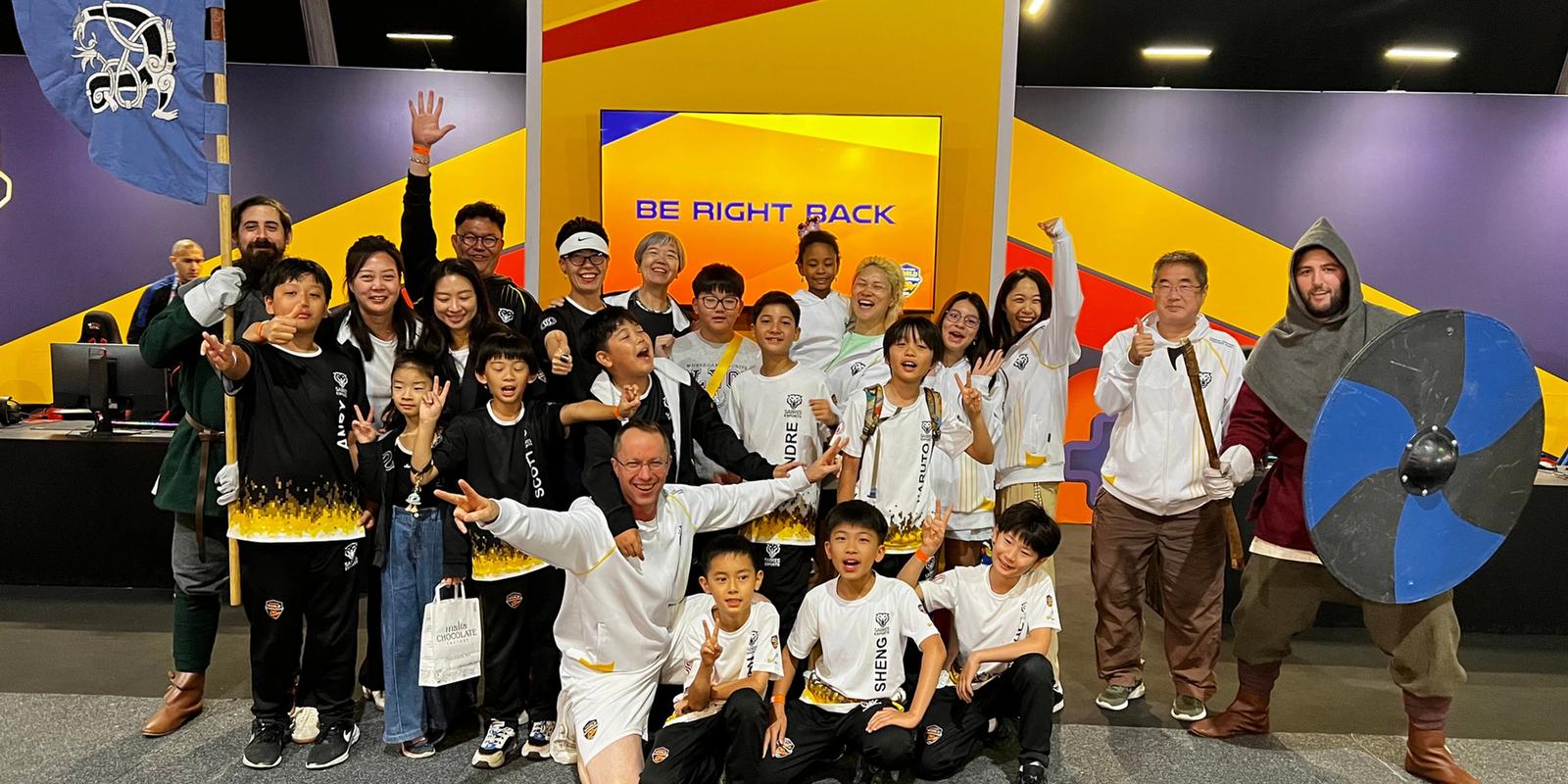
In October 2025, eleven schools flew to Malta for the inaugural School Esports World Championships. They came from Bermuda, from Saudi Arabia, from South Africa, from the UAE, and from the UK. And then there was one more: a school that had travelled further than almost anyone else in the field, representing a country of 1.4 billion people. Shanghai Singapore International School was the only school from China. And they were ready.
"Taking the first opportunity makes us trailblazers," says Craig Griebenow, SSIS's K12 Technology Integration Coach and the architect of the school's esports programme. "We are pioneers. And so, along with our parent body and our students, we committed: even if we got destroyed, that was okay. Because we learn from every experience."
They did get destroyed. Craig will tell you that himself, and he will tell you with a smile. Because that is not the story.
From Tux Kart to the World Stage
The SSIS esports story does not begin with a grand plan. It begins, about five years ago, with a free game called Tux Kart Racing and a technology teacher who believed that students who were not academic, not sporty, but loved technology deserved a space of their own.
"I started to introduce the idea of esports in our co-curricular activities," Craig explains. "We thought it could be beneficial for students who weren't academic, weren't sporting, but enjoyed technology. We used free tools, closed servers. We started small."
What came next was a chance encounter. David Shirley, SSIS's Head of School, bumped into David Higginson from DAIGON at a head of school conference. They met in a lift. They talked. David Shirley came back to Shanghai and came to Craig.
"He knew I had been dabbling around looking at esports as an option," Craig says. "He was passionate about having something the kids were excited about. He mentioned DAIGON to me a few times. I was busy. And then, maybe a few months later, I went and looked in."
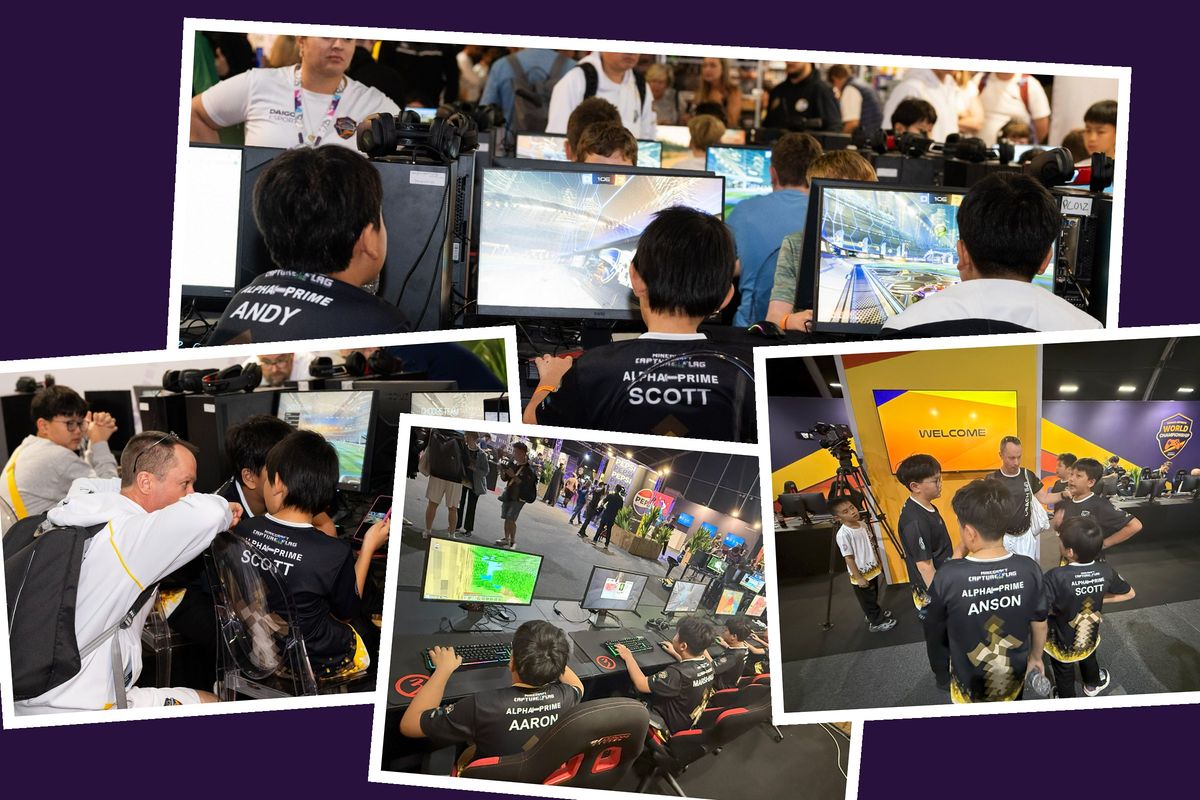
Three years on, Craig has not just built a programme. He has built the Sabres Esports Academy, a structured pathway that starts from Grade 2 and runs through the school. Students train in the After School Programme across three terms. Beyond the players themselves, other students are getting involved as event managers, coaches, and commentators. The programme now anchors SSIS's ambition to become, in Craig's words, "one of the schools that are the beacon of esports in China."
What Coaching Really Means
Craig's background is not in technology. It is in sport. He has coached cricket, soccer, and volleyball. He has worked in South Africa, the Middle East, and now China. And when he looks at his Minecraft CTF squad, he sees exactly what he has always seen on a pitch.
"Coaching is not about being the best player," he says. "It is about managing the team and helping them succeed as a unit. Esports is exactly the same. It is all about helping students work out how to communicate, develop their skill, push through disappointment, become resilient."
What esports offers that traditional sport cannot is access. The game does not care whether you are physically fast or strong. "It is your mind," Craig says. "Fine motor coordination. Your agility of thinking. Your perceptual ability to see what is happening on screen and project beyond that."
For a school like SSIS, where students come from dozens of nationalities and not all of them will find their place in football or swimming, that access matters.
SSIS's programme runs on the principle that regular training is not optional. "You cannot get better at competition unless you compete," Craig says. "When we went to the World Championships, we got destroyed in all of our games. We were playing against teams from schools that had been playing for three, four, five years. That experience makes a massive difference."
"We have something we call future global leader attributes. Love of humanity. Lifelong learning. Strength of Character. Those are the core. And they are very much similar to what the team at DAIGON is driving. That is why I connect so well with them."
Being the Only School from China
In China, young students face significant restrictions on competitive gaming. The regulations that govern screen time and online competition for Chinese nationals create a landscape where international schools operate in a uniquely privileged position.
"International schools have the opportunity," Craig says, "and it is really a wake because we are the role model. We are not just competing in a small bubble. We want to be connecting globally. We are an international school. We want the opportunity to compete internationally."
He pauses. "It is such an honour to be representing China."
The sense of responsibility that comes with being the only school from an entire country in a world competition is something Craig sits with deliberately. "It is not just about whether or not we win or lose. It is how we compete. Are we carrying the responsibility? Are we presenting ourselves?"
One answer has come from the pilot esports league that Craig launched in China last year in partnership with DAIGON, bringing schools across the region together to compete. The full official league is launching now. SSIS, the pioneer, has become the reference point.
The Player Who Came Back
Before leaving for Malta last year, SSIS needed to fill a final place. One of the qualified students could not make the trip. Two students tried out. One made it.
The one who did not is now one of the strongest players in the squad.
"After not making it to Malta, that student spent the next year training and developing," Craig says. "He has gone from not qualifying to now returning as one of our strongest players. That resilience, the fact that he did not get it and was able to push through, is really exciting."
Craig has seen this pattern more than once. Students who were told they were not yet at the level required, who took that honestly, and who came back transformed.
"I have had students who were not selected and initially were not behaving as I needed them to. I told them honestly what it would take. And since then, I have seen a marked difference in their behaviour. They said, we want to be a part of the programme, and so we are willing to step up. That is the power of esports."
Three Players Who Grew Up in Malta
The three junior players returning to SEWC 2026 are different from the students who boarded the flight to Malta twelve months ago. Craig has watched each one change.
One of them, who struggled visibly with emotional regulation under competitive pressure last year, has developed into a more composed, team-focused player. "He was really a free agent last year," Craig says. "He is working much better with the team now. He is regulating himself much better. That intense pressure and disappointment, having to pick himself up, was a wonderful growing experience."
The other two have moved from playing the game to thinking about it. "They are starting to plan," Craig explains. "Who can fit in what role? How do we develop multiple strategies so that when a team appears to overpower us, we can adjust on the fly? Where are our strengths? Where are our weaknesses? How do we read the other team?" He smiles. "They are thinking of it much more strategically now."
A Multicultural Team, a Single Goal
SSIS is a school where the team around the table might include students from Singapore, South Africa, the Philippines, the UK, and South Korea, all sitting in Shanghai. The Minecraft CTF squad reflects that reality.
"The students have to learn to talk to each other," Craig says. "They have to come up with a common language. That is one of the strategies they develop, and it is actually a strength. Each of the different players comes with a different perspective. They see things differently. But because they are competing toward a single goal, they lay aside a lot of their differences. They come together. They learn to value people who come from different cultures."
For a school that has been educating expatriate families in Shanghai since 1996, that ability to build common purpose across cultural difference is not just an esports lesson. It is the whole point.
What SSIS Wants You to Know
Craig was asked a direct question near the end of our conversation: when someone reads this profile, how do you want them to feel about SSIS and about what you are building there?
He did not hesitate.
"Our school is an inclusive school. We are internationally competitive. Our academics are very high. We have students with a high level of agency and a high level of drive to perform at their very best. But at the same time, we have students who work together, who are connected as a community, who support each other. We have a parent body that backs the growth and development of their children, and a school leadership and board committed to expanding and strengthening every possible pathway for our students to succeed."
He paused before finishing. "We do not want to dictate their path. We want to work with them to find a pathway that allows them to shine and flourish. So that our students can become true global leaders in the future."
Back to Malta
SSIS returns to SEWC 2026 with a different posture. Last year, the goal was to be there. This year, it is to compete.
"Many of the teams that competed in the junior category last year are now moving to the senior division," Craig notes. "That means we carry more experience than almost anyone else in the junior field. Last year, we went there to explore, to see what it was like, to learn. This year, our hope is to go in and be competitive. To genuinely rub shoulders with some of the best junior teams in the world."
The school that met David Higginson in a lift three years ago is flying back to Malta in November. The Sabres Esports Academy trains from Grade 2. Students who did not make the first cut are now some of the strongest players in the programme. A pilot league has grown into a full official competition across China. And the only school from China at the inaugural School Esports World Championships is returning, having learned everything it could from being destroyed, ready to show what it built.
That is the SSIS story. That is what trailblazers look like.
Shanghai Singapore International School competes in Minecraft Capture the Flag at the School Esports World Championships 2026, Malta, November 18 to 23. SSIS qualified through the DAIGON Competitive Track.
Interested in bringing DAIGON to your school?
Book a call