Built Differently: How Ibstock Place School Arrived at the World Championships
Ibstock Place built a twelve-PC Esports Arena first, then hired an esports professional to coach in it. In November two Rocket League squads take the school to its first world championship in any sport.
School Blog Profile | DAIGON Esports | SEWC 2026
Most schools that run esports started the same way. A teacher who loved gaming raised their hand. They persuaded someone in leadership to give it a try. They found a room, scraped together some computers, and built something from nothing on enthusiasm and personal time. It is a good story. It is how most of the schools heading to Malta in November got here.
Ibstock Place School did it differently.
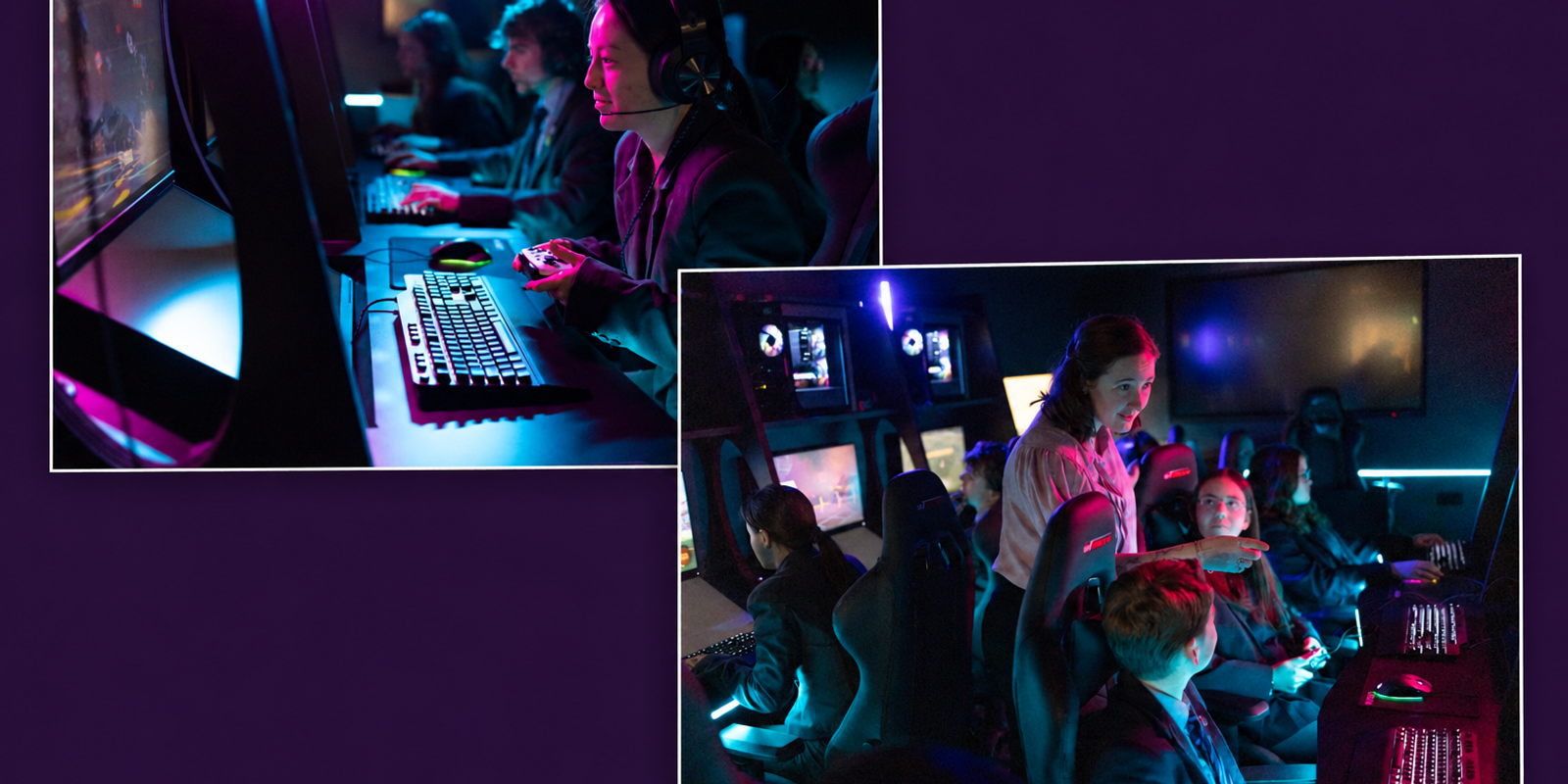
The school in Roehampton, South-West London, did not wait for a teacher to raise their hand. Leadership decided that esports was the future and invested accordingly. First, they built a dedicated Esports Arena: twelve high-specification PCs, peripherals optimised for competitive play, LED lighting with the school logo, a coaching display connected to a large whiteboard at the front. Then, once the space existed, they went looking for the right person to fill it.
They found Jacob Southwood.
Jacob is not a teacher who got into esports. He is an esports professional who became a teacher. He played competitively at university. He has thought seriously about what a coaching programme in a school should look like. And when Ibstock brought him in, he brought a different standard with him.
"The school built an esports facility and then brought me in for it," Jacob says. "We're trying to be at the forefront of esports schools. Leading the way with everything we do."
Inside the Arena
The Esports Arena at Ibstock is not a room where students go to play games. It is a room where students go to be coached.
Sessions run like classroom lessons. Jacob works from presentations and tactical frameworks. He puts game theory on the whiteboard. He shows replays and breaks down decision-making under pressure. Students at the back of the room are learning; students at the front are competing. The same space, the same session, serves both.
"It's not just kids coming in to play," Jacob says. "They're coming in to get a structured coaching session, to learn valuable skills that can be used in life."
The programme extends across the whole school. Rocket League is the flagship. Minecraft runs in the prep school. An Overwatch team comes in at lunchtimes to train and compete in the British Esports Student Championships. A house FC competition runs as a knockout tournament for house points, open to any age, any student. Over the past two years, Ibstock has also hosted an esports conference for other schools, designed to help grow the ecosystem beyond its own walls.
David Higginson, Sales Director at DAIGON, attended this year.
The Stop on the Tour
Every school that runs admissions tours for prospective families has a moment where they show off something unexpected. At Ibstock, that moment is the Esports Arena.
"Whoever's doing the tour will always come down to esports," Jacob explains. "Because it's just one of those things you don't typically see in a school."
Parents who arrive with reservations about gaming in a school setting tend to leave with a different view. Jacob has given this explanation many times: the programme is monitored, structured, and capped. Students train once a week, or twice if they are competing. It is not eight hours in front of a screen. It is a coached session with clear objectives, followed by competitive application.
"A common misconception is that parents are very much against it," Jacob says. "I don't think they are, for the most part. I think they just don't understand how it all works and why. But when I explain it, they're always very interested."
Everyone Can Play
The students at Ibstock's esports programme are not who you might expect. The room on any given session might hold an eighteen-year-old rugby player sitting next to a younger student, sitting next to someone who has never competed for the school in anything.
That last group matters most to Jacob.
There are students across the world who cannot compete in school sports because of a physical disability. They love competing. They love to play. Esports gave them what traditional sport could not.
"They love to compete. They love to play," Jacob says.”Esports gives an opportunity to students from a wide range of backgrounds to compete for their school.”
Ibstock is a school which strives to ensure every student feels included with a wide array of extra curricular clubs. Esports echoes this with SEN students represented across the programme, including at the competitive level. Jacob sees this not as a footnote but as one of the clearest arguments for why esports belongs in schools.
"There is no limitation on who can play. Whatever age, gender, disability. Anyone can play esports."
Next year, he is planning a beginners' league in partnership with other schools, specifically designed for students who have never competed before and who would be lost in the British Esports Student Championships. The emphasis is on girls and students with no prior experience. The idea is simple: everyone deserves a place to start.
The First World Championship in Anything
For all that Ibstock has built, one fact stands apart from everything else Jacob said on the call.
Ibstock Place School has never competed at a world championship. Not in football, not in rugby, not in any sport in the school's history. In November 2026, that changes.
"Everyone I've spoken to has confirmed: we've never been to a world championship for anything," Jacob says. "It's a really cool experience. A good chance for us to put ourselves on the world map. And we're going there with intentions to try and win."
They qualified on two separate routes, through DAIGON and through ECIS, and originally earned three team places. A clash with Year11 mock examinations forced them to leave one team behind. Two Rocket League squads will make the trip to Malta.
And they arrive with unfinished business.
Earlier this year, at the ISA competition, Ibstock faced the reigning SEWC Rocket League world champions, Lycée International de Londres Winston Churchill. It did not go their way. Both schools are now confirmed for SEWC 2026.
"My message to the players is: it doesn't matter who we're playing, go in with the mindset that we need to be at our best," Jacob says. "Hopefully we'll meet Lycée at some point in the tournament, maybe in the final, and we'll see if we can get our revenge."
Growing the Game
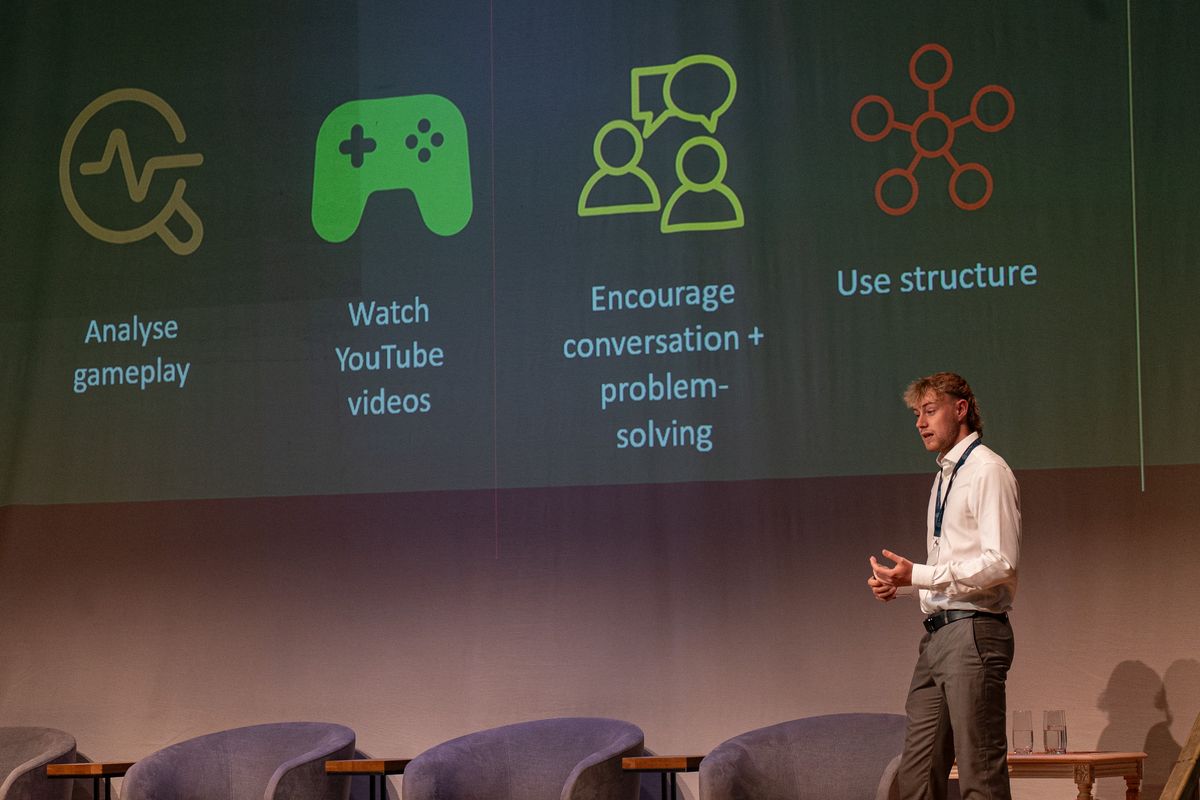
Jacob's ambition for Ibstock extends beyond Ibstock.
When he was at university, he competed in student esports and tried to grow it as far as he could. He sees what he is building at Ibstock as part of the same project, just at a different level. A school programme that is structured, coaching-led, and open to all students is the base of something that can eventually connect to a professional scene.
"If schools build a really good grassroots scene, it'll develop into the professional scene as well," he says. "Kids are gonna play games. If we can guide them into developing the right skills, that'd be really useful."
That is why Ibstock has run an esports conference for other schools two years running. Not to show off what they have built but to help others build their own version. A better ecosystem around the school benefits everyone, including the students at Ibstock who want better competition.
What Jacob Wants You to Know
Ask Jacob what he wants people to take away from reading this, and his answer is precise.
"We're trying to be at the forefront of esports schools. The school hired me, someone experienced in esports. We're pushing structured coaching. We're trying to help other schools develop their esports provision. And we're trying to be the best at ours."
He pauses. Then he adds something that perhaps says more than anything else.
"Kids are gonna play games. We might as well get them playing in a controlled environment where they can develop real skills they can use in future life."
That is the Ibstock bet. The school made it deliberately, early, and with the resources to back it. In November, Malta will tell them what it is worth.
"E-sports has enabled me to use my skill in videogames to compete internationally. It has been really fun and motivating to improve. Additionally, it has given me the opportunity to compete against other schools. I am really looking forward to competing on LAN in Malta."
An Ibstock Place School student, SEWC 2026
"The more we've engaged with it, the more we've understood that esports brings a powerful and distinctive new strand to our provision. Already, we've seen how strongly it contributes to the building of an inclusive community in which everyone can belong. I'd not anticipated the pastoral benefits which the programme could bring, but they're palpable and they're making a difference. Now, though, as our team develops and as we extend the scope of our programme into our Sixth Form curriculum, we're beginning to see how it can drive the skills agenda too. We've a mission to ensure that our young people are as well prepared as they can be for a world transformed by AI. We think that esports makes a massive contribution to this aim. It's been such a worthwhile investment and our trip to Malta is another step on a journey we're excited to be taking."
Chris Wolsey, Headmaster, Ibstock Place School
Ibstock Place School competes in Rocket League at the School Esports World Championships 2026, Malta, November 18 to 23. Ibstock qualified through the DAIGON Competitive Track and the ECIS x DAIGON Esports Competition.
Interested in bringing DAIGON to your school?
Book a call